
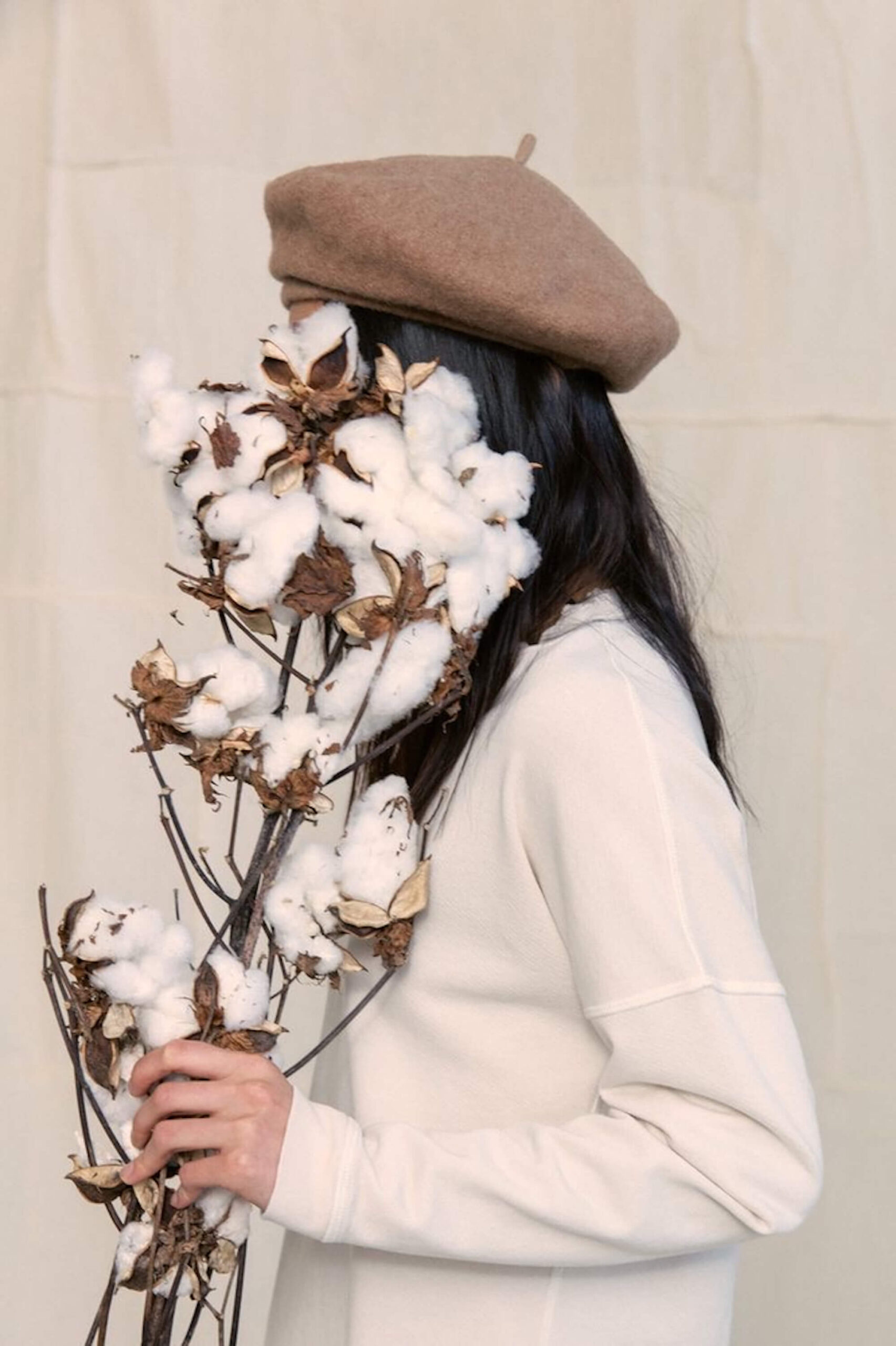
I’ve been thinking a lot about the fabrics I want to use for the brand and this collection. It feels like a very important decision for me. Because not only does it entail the look, feel, and structure of the pieces, it also entails their sustainability. Which is almost the central focus of my brand.
One of my favorite lectures from my masters program was one about fabrics. That class made me realize that without understanding fabrics and where they come from, we wouldn’t be able to appreciate them. Knowing your fabrics is the main building block for creating a quality garment, it is the most fundamental part of understanding how to dress up your pieces. This class gave me so much insight on that. Our lecturer went into extensive detail about different types of fabrics and where they all came from. He spoke about the history of plants, and their families. He explained how and when we discovered certain materials and how we figured out the proper ways to source them. He talked about linen, tencel, and cotton. Specifically Egyptian cotton. I remember sitting in that lecture hall filled with so much pride. The cotton he was speaking about was from my country. And it carried so much history.
Egyptian cotton (Gossypium Barbadense) is the rarest and most luxurious variety of cotton. It is grown exclusively in Egypt, and is known as the longest variety of cotton, known as extra-long staple (ELS) cotton (3.8 – 4.4cm). One of the more special things about Egyptian cotton is that it’s still, to this day, harvested by hand. This allows it to keep its fine structure and feel. It is stronger and softer due to the hot climate. Between the salt from the Mediterranean and the soil from the Nile, Egypt offers the perfect mix for the formation of this cotton.
Egyptian cotton has been one of the most demanded materials world wide for decades. We first started exporting it in the 1800’s, and it specifically kicked off around the US civil war as their cotton supplies were falling short. We increased our production by double, and we’ve been exporting cotton ever since.
The hand-picking of cotton might just be the most golden thing about this craft, it is truly an art. Until today, it is the thing that ensures the cotton’s optimum purity and the length of its threads. Because the cotton is harvested by hand, the threads are able to keep their length without breaking, something that would not happen if it was harvested any other way. Hand-picking cotton is historically the way we’ve always done it, and it is still considered the best way to harvest the cotton we call “White Gold”.
